Uncovering the redox homeostasis of plant-microbes-stress interactions
Bring the balance of plant health
Project Overview
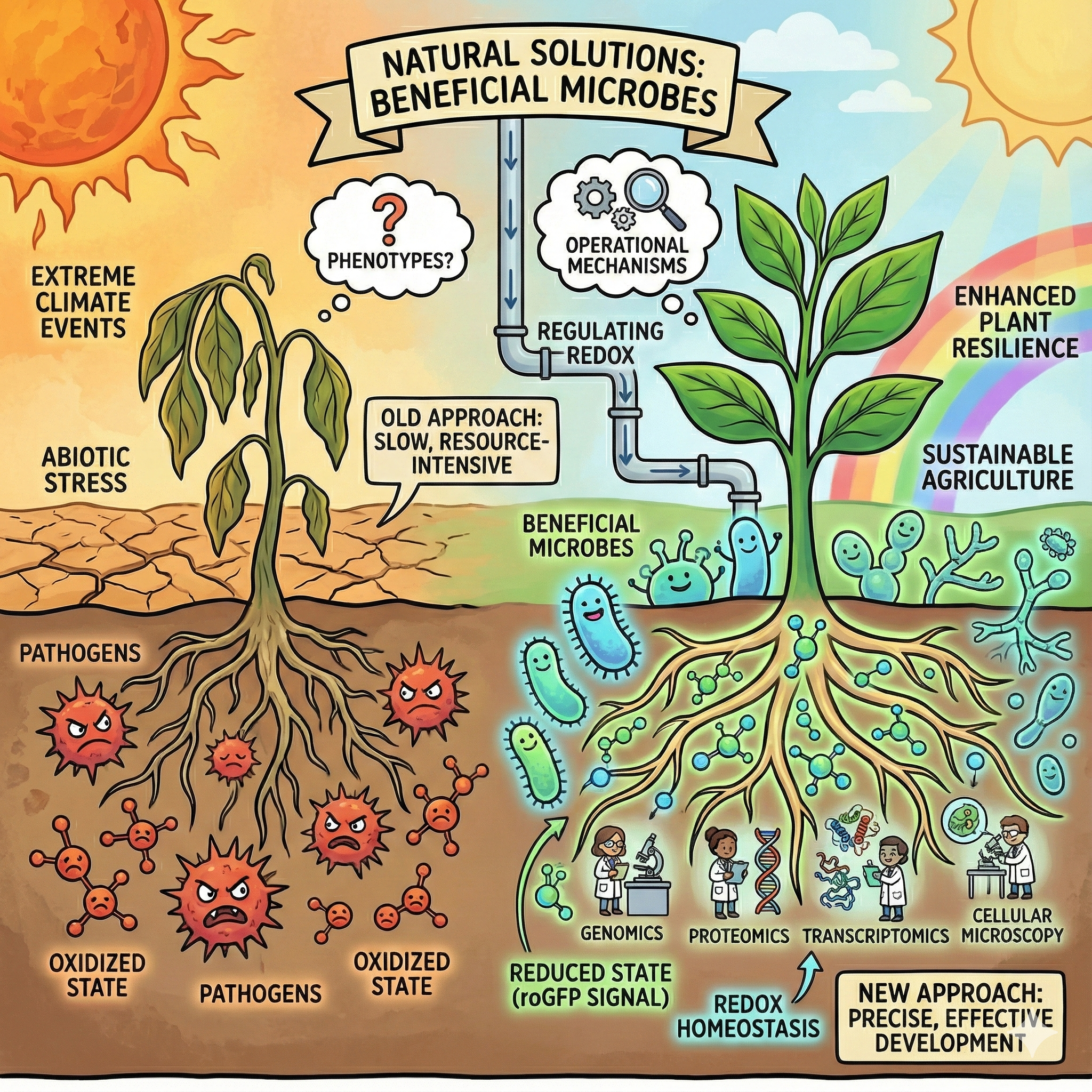
Under increasingly frequent extreme climate events, beneficial microbes offer nature-based solutions for enhancing plant resilience, yet mechanistic understanding remains limited. This research investigates how beneficial microbes regulate redox homeostasis in plant root tissues under abiotic stress. Preliminary findings demonstrate enhanced Arabidopsis root development under drought and heat stress, with elevated expression of redox-related genes and increased reduced-state signals in root tissues. Employing Arabidopsis expressing redox-sensitive fluorescent proteins (roGFP2), this project integrates transcriptomics, enzyme assays, and morphological analyses to establish mechanistic frameworks for sustainable agricultural development and enhanced crop resilience.
Project Aims
- Characterise microbe-specific redox regulation patterns
- Analyse microbe-induced stress resilience system responses
- Identify redox regulatory networks through transcriptomics
Project output
This project established a redox-based evaluation system for beneficial microbes using roGFP2 fluorescent protein monitoring in Arabidopsis roots. Results demonstrated that different microorganisms exhibit distinct redox regulation patterns under various stress conditions, with certain strains effectively maintaining reduced states and promoting root development under drought stress. Integrated analysis revealed significant correlation between root redox status and plant resilience. Through transcriptomic network analysis, key redox-regulatory gene modules were identified, elucidating molecular mechanisms underlying microbe-mediated stress tolerance. This mechanistic framework provides scientific foundation for rapid screening and development of beneficial microbial materials, advancing sustainable agricultural practices and crop resilience enhancement strategies.